 I've been thinking about the alchemy of impactful partnerships a lot lately: We've been lucky to have some amazing partnership wins over the last decade — and plenty of failures, too. Over time, my team and I have gotten better at screening for partnerships that will be a big win for all involved. But as exciting and full of promise as they can be, jumping into any kind of business arrangement is not something to take lightly. Whether it was in forging a long-standing relationship with a big tech brand or carving out a relatively new opportunity with a renowned creator and journalist, I've always believed partnerships should be designed to deliver tangible value for all parties, and their success needs to be predicated on a robust process to ensure the best outcomes. While data shows partnerships are a good idea for creators and entrepreneurs looking to expand their reach, boost revenues, and build brand equity, they're only beneficial if they're defined and approached effectively. And the reality is, many of them fail due to mismatched expectations. For creators and entrepreneurs, the question of when, how and who to partner with will inevitably come up at some point in their journey. Here's what to consider if you're looking to set up a business partnership that beats the odds. Be proactive about exploring your options There are many different types of partnerships you can enter into, but before you do, take the time to consider which would best suit your business — whether it's a traditional brand sponsorship, a reciprocal swap or a more collaborative endeavor. And if you haven't been approached by a brand, there's no need to wait for them to come to you. Being proactive about identifying and pursuing opportunities can also yield incredible results. Sometimes it boils down to the right conditions happening at the right time. Take Coastal Drone Academy, a creator business that saw the chance to expand its reach when drone operators faced new regulations and certification requirements. They partnered with Best Buy to package their intro course with every drone sold. The creator business benefited from the retailer's extensive customer base and its significant brand association. Meanwhile, Best Buy was able to provide a true value-add to its drone sales. Go in with eyes, mind and heart wide open Knowing exactly what you're getting into is important to your partnership's success. But so is keeping an open mind — and heart. I realize that might sound a bit corny, but partnerships, like any relationship, are built on trust above all else. Here are some helpful ways to approach partnership-building with that in mind:
Bonus consideration:
Regardless of how you structure and approach your partnership, the benefits will go beyond the metrics you set for exposure and sales. A collab can become a forcing factor around time and motivation, kicking you into high gear with deadlines and deliverables that might feel less urgent when you're working solo. But keep in mind, while it might be tempting to jump into the first partnership offer that comes your way, I'd caution against it — even if it matches your core business values or content. My biggest advice is to do a gut check before you sign on the dotted line. Or, ideally, much earlier in the process. Does the partnership feel right to you? Are you inclined to give as much (or more) as you'll receive? Do the benefits outweigh the risks? Depending on the answers to these questions, remember that there's no obligation to proceed. Just like choosing a life partner, finding the right business partner can take time. Being rigorous right away can be a great way to get your feet wet before jumping into the deep end. Source: https://www.entrepreneur.com
0 Comments
 What is disruption in small business? Entrepreneurs and startup junkies are always going on about the power of disruption – and when the media report stories about disruptive innovation, it’s widely assumed the term is just a synonym for innovation. But the truth is, disruption and innovation are two totally different things. To explain how and why, it’s worth back-tracking a bit. What is Disruption? When talking about any kind of business-related disruption, we’re actually referencing a wider theory of “disruptive innovation”. This term was coined and defined for the first time by Harvard Business School’s Clayton Christensen in his 1997 book “The Innovator’s Dilemma”. According to Christensen, disruptive innovation occurs when an industrial advancement creates brand-new markets via the discovery of new types of customers. What does that mean? Essentially it means that all disruptors are innovators, but not all innovators are disruptors. For example, the first automobiles that emerged in the late 1800s were not a disruptive innovation because they didn’t pose a tangible threat to companies that produced horse-drawn vehicles. At that point, this new technology was perceived as an ultra-luxury item competing for a tiny share within an existing sales market. That all changed when Ford debuted its first mass-produced automobile, which essentially shifted market demand by offering a previously non-existent, affordable transportation option for the masses. Cars weren’t disruptors, but the Ford Model T was a textbook definition.  What Should You Do About Disruption? It’s easy to laugh about scores of redundant horse-drawn carriage manufacturers going out of business a hundred years ago because of Henry Ford – but it’s not quite as funny if it’s your business at risk. So, what does disruption look like in the here and now? Businesses have generally got two options when faced with a disruptive innovation: try and hold on to an existing market by doing the same thing better, or try to capture new markets by embracing new business models and technologies. IBM provides a pretty straight-forward example of the former. The personal computer was a huge disruption, because it ignited a new mass-market that had previously been non-existent. Until then, computers were commonly perceived to be huge, expensive mainframes that were sold only to huge companies and universities. Rather than cry over spilt milk, IBM chose to react to personal computers by launching a new business division to focus exclusively on the production and development of IBM PCs. The venture proved undeniably successful, and helped IBM to better position itself in this new market. Netflix is an apt example of a business that responded to disruption by changing and embracing a new business model. The company initially launched as a video rental company that sent out DVDs to customers in the mail. Yet as online video began to dismantle the traditional video rental market, Netflix decided to drop their old business model entirely in order to adopt a brand new way of doing business and launch a streaming business of its own. The rest, as they say, is history. The Role of Timing in Disruptive Innovation Timing plays a critical role in the realm of disruptive innovation. It can make the difference between a groundbreaking success and a missed opportunity. Here’s why timing matters:
 Navigating the Timing Challenge Given the complexity of timing in disruptive innovation, here are some strategies to navigate this challenge effectively:
Iterative Learning and Feedback Loops In the world of disruptive innovation, the journey is often just as important as the destination. Embrace an iterative approach to timing that allows for continuous learning and adjustment:
 Embracing Risk and Uncertainty Disruptive innovation inherently involves risk and uncertainty, and timing is no exception. To navigate this:
Building a Timing-Centric Culture To fully harness the power of timing in disruptive innovation, consider cultivating a timing-centric culture within your organization:
 Evolving with the Ecosystem Finally, remember that the timing landscape is constantly evolving, driven by factors such as technological advancements, market shifts, and global events. To thrive in the long term:
Embracing Change: Preparing for Disruption in Your Small Business In the dynamic landscape of modern business, disruption is not a question of if, but when. Preparing your small business for potential disruption involves a proactive approach, embracing change, and being ready to adapt. Here are key strategies to fortify your business against the unpredictable waves of disruptive innovation: Cultivate a Culture of Innovation
Strengthen Your Online Presence
Diversify Your Product or Service Offerings
Build Strong Relationships with Customers and Suppliers
Leverage Data and Technology
Plan for Financial Resilience
Conclusion: Navigating Disruption with Agility and Resilience Disruption can be daunting, but it also presents opportunities for growth and innovation. By preparing your small business in advance, you can navigate the challenges of disruption with agility and resilience. Embracing change, fostering a culture of innovation, and building strong relationships with customers and suppliers are key to thriving in a constantly evolving business environment. Believe it or not, small business owners are generally best positioned in order to survive disruptive innovation and emerge stronger. After all, it’s much easier to pivot a small, niche service with a few employees than it is for a multinational to risk investing billions into creating previously untested business divisions. At the end of the day, disruption is all about trial and error. That’s how disruptive innovations emerge, and it’s also how businesses must learn to adapt and survive. Just remember to keep your ear to the ground, think outside the box and tread carefully. Remember, the ability to adapt and evolve is a significant advantage for small businesses in the face of disruption. Source: https://smallbiztrends.com Image Source: Disruptive Innovation Photo via Shutterstock  Building a business from the ground up is an exciting endeavor. While many entrepreneurs dream of launching their very own startup, few pull it off successfully. Statistically speaking, 20% of all startups fail in their first year. Flash forward five years, and the failure rate jumps to 50%. This failure rate often isn't a result of having a bad product or service. Many startups have great, innovative products that have a lot of potential. The challenge is that startups face many headwinds in their early years, especially when they are competing in sectors that have large established brands. Not only do they have to figure out how to draw attention to their product, but they also need to do it with limited financial and personnel resources. Successfully marketing a startup requires creativity and innovation. Here are six out-of-the-box marketing strategies that any startup can use to capture brand attention in a unique and exciting way. 1. Influencer partnerships One of the most challenging things about being a startup is the lack of brand awareness. Without brand awareness, you'll struggle to generate sales and revenue to keep the business alive. It's critical to build brand recognition and awareness as quickly as possible. You can have the greatest product on the market, but unless someone gives you a chance, it's unlikely that you will make many sales. Working with an influencer who has connections with your target audience is a great way to generate rapid brand recognition. People follow influencers because they care what they have to say. If an influencer promotes your brand, their audience will listen. 2. Enhanced content marketing Most marketers swear by the power of content marketing. While there is power in delivering a steady stream of informative and entertaining blog posts, articles and social media posts, you can take this to a whole new level by focusing heavily on audience engagement . Figuring out ways to promote user-generated content is a great way to build a following and establish social proof. User-generated content focuses on encouraging your audience to post information and reviews and creating content featuring your brand. Like influencer marketing, people care about what their friends and family say about the products and services they use. Another highly effective method is to make your content as interactive as possible by introducing quizzes, polls and interactive videos. 3. Memorable experiences Studies have shown that three-fourths of people who engage with a brand during an event are more likely to buy the promoted product or service. Events are the perfect way to deliver the authenticity and unique experiences that consumers crave today. These events can include pop-up stores, exclusive product launches and workshops. Don't be afraid to experiment with cutting-edge technology such as virtual reality and augmented reality to build memorable connections in the digital world. 4. AI-powered personalization Consumers are tired of feeling like a number. Any opportunity you have to customize your marketing messages to each specific customer is a win. Fortunately, new technologies like artificial intelligence (AI) and machine learning (ML) are making this much easier. These tools can sift through thousands of data points to help you identify your target customers' personal behaviors and preferences to deliver customized messages or product recommendations designed just for them. 5. Cause marketing and social impact campaigns People no longer want to simply purchase a product or service. More and more consumers care about the impact that brands are making on the world around them. Aligning your brand with a social cause or issue that resonates with your target audience is a great way to build brand awareness and positive reception. 6. Collaborate with other startups Just because you are running a startup, doesn't mean you are on your own. There are other startups out there that are looking to build their brand as well. Forming partnerships with other startups that have complimentary offerings is a great way to work together and tap into each other's audiences. This can also help foster a sense of innovation and idea-sharing within the startup community. The world of startup marketing is constantly evolving. It's important that startup marketers keep a pulse on changes in technology, especially as AI, ML and voice optimization mature. Social movements and cultural norms may also shift over time, allowing leading brands to stay ahead rather than jumping on the bandwagon when it's too late. Finally, more and more companies have the capability to develop and produce similar products. Success will ultimately boil down to the overall experience and authenticity of the brand itself. Startups that are able to keep these trends in mind will be best positioned to be one of the few that go on to obtain long-term success. Source: https://www.entrepreneur.com  For any successful business, client management is not an option — it’s a priority. McKinsey & Company found that across industries, customer experience leaders experience double the growth compared to their peers. Client management refers to managing customer and client relationships for a business organization. Successful client management results in happy, loyal customers who return to the company whenever they need its products or services. Typically, the people in charge of client management within an organization work in sales, customer service, or marketing roles. Client managers oversee, build, develop, and strengthen relationships with customers. They design and implement customer relationship development strategies to connect with the organization’s clients over the long term. With effective client management, you not only ensure your clients are happy but also deepen those relationships to help your business grow. The importance of effective client management Client management is imperative for any company that wants to build a reliable, dedicated customer base. When you develop strong relationships with clients, they’re less likely to turn to your competitors when they need products or services you sell. Instead, they’ll stick with your organization, boosting your revenue and allowing you to meet financial objectives. Satisfied customers will tell their friends, colleagues, and family about their experience with your organization, getting you more clients and generating additional sales. Plus, you’ll develop a positive reputation within your industry. Core principles of client management To develop solid client relationships, you must first understand your customer’s needs. When you know what your clients want from your organization, you can develop a comprehensive management strategy. Setting realistic expectations Not all clients will stick with your company for the long term. That’s true for any organization. There are some aspects of a customer’s decision-making process you can’t control, no matter how hard you work to strengthen relationships or meet a client’s needs. For instance, assume you sell toddler clothing through an e-commerce website. Your clients are adults with young children. Once their kids outgrow the clothes you sell, they’ll stop buying from you. They no longer require your products, but that doesn’t mean they don’t appreciate your business. With effective client management, however, you can get them to refer your business to other new parents they know. It’s essential to set an attainable goal for your client retention and management efforts. While 100% retention probably isn’t realistic, 50% might be. Reasonable expectations depend on your business model and industry. You might set initial benchmarks and work toward meeting them. Value of honesty and transparency Customers value honesty and authenticity. A Harris Poll survey found that 82% of customers want a brand’s values to match theirs. It’s essential to reach them where it counts — in their minds and hearts. Try to avoid spammy messages and cold calls that frustrate buyers and turn them away from your company. Instead, keep their needs in mind and ensure your messages provide something they value, like:
Consistent and fast communication Whenever a customer contacts your company directly, they usually have a pressing need they want you to address. Have a system in place so you can always respond to customer inquiries quickly and efficiently. For example, you might set up a dedicated customer service line or a team to reply to incoming client emails. Promptly responding to client requests will help you sustain customer relationships. Understanding your client’s needs Think about prior positive experiences with your customers. What did you provide them that made them happy with their purchase? Did they love the products or services you offered? Did you help them through the buying process, ensuring they found a suitable item to address their needs? Were your follow-ups sincere and helpful? When you know what your customers want, it’s easier to identify ways to meet their needs. Of course, every client is different, so consider segmenting your customer base according to various factors, like:
That way, you can identify differing customer needs across your audience. Building trust with your clients Find ways to demonstrate your company’s trustworthiness and credibility. Doing so will make establishing connections with your customers more straightforward, which you can build on over time. For instance, you might showcase prior customer testimonials or reviews to show how much previous clients enjoyed your products. When new clients see that others enjoy your services, they’ll be more likely to trust what you offer. Measuring success in client management Establish key productivity indicators (KPIs) to evaluate your client management efforts. Some examples of CRM metrics include:
You can set benchmark client management KPIs and track your results against your goals. Focusing on long-term goals While accomplishing short-term objectives is great, it’s also a good idea to set some long-term goals for your client management efforts. Define what’s important to your company and work to meet your target over the next year, five years, or ten years. For example, you might aim to increase client retention by 10% or attain a number of five-star customer reviews. Client management skills Certain qualities can help you achieve your customer management objectives. Universal skills for successful client management skills No matter what industry your company is in, there are a few ubiquitous traits that are beneficial for client management. Active listening and responsiveness Customers want you to hear and understand their needs. Listen to what they tell you rather than assuming you know what they want. Take notes of their concerns and pain points, and truly engage in the conversation. Ask questions if you’re unsure of what they’re saying. Keep in mind that when a customer communicates directly with your company, they expect a quick response. Set processes in place to answer client phone calls, emails, and other messages within a short timeframe. Problem-solving and creativity When addressing a customer’s inquiries, put your problem-solving and creativity skills to work. Understand their issue and identify ways to resolve it without friction. For instance, say your client placed an order with your local shop, but it arrived late. They call you and express their dissatisfaction. If your store is within a reasonable distance, you could assign a team member to hand-deliver the item immediately and provide them a gift or special discount for the inconvenience. That would help you repair any damage to your client relationship and encourage them to return next time they need your products. Negotiation and patience Not every customer encounter will be pleasant. Sometimes, clients may express frustration, make impolite comments, or treat you poorly despite your best efforts to meet their needs. If you’re dealing with a difficult customer, maintain your cool and keep your client management goals in mind. Try to negotiate with them or explain your policies so they understand. Strategies for managing client relationships Here are a few ways you can build and develop strong client relationships. Strategic communication and follow-ups Any time a customer browses your store or inquires about your services, use it as an opportunity to communicate with them. If they’ve signed up for your email or SMS subscription list, send them a quick follow-up message encouraging them to take further action or letting them know you’re here for them if they have additional inquiries. For example, look at this welcome email from The Washington Post. It encourages the subscriber to sign up for daily news updates and follow favorite columns to stay on top of what’s going on in the world. 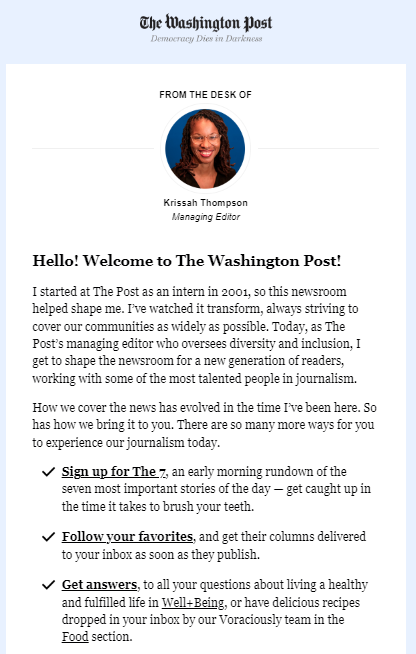 A welcome email from The Washington Post introducing the recipient to other features and updates that might interest them. Image Source: The Washington Post Methods to collect and act on client feedback Once a client purchases from you, it’s crucial to get their feedback. Customer insights help you understand where you’re meeting client needs and where you can improve. Take a look at this email from Adobe. It asks the recipient to complete a short survey about their creative and digital activities to help Adobe improve its current product and services. In exchange for completing the survey, the recipient gets entered into a drawing for a gift card. The email accomplishes two things: it helps Adobe learn more about customer needs and offers clients a potential reward for providing feedback. 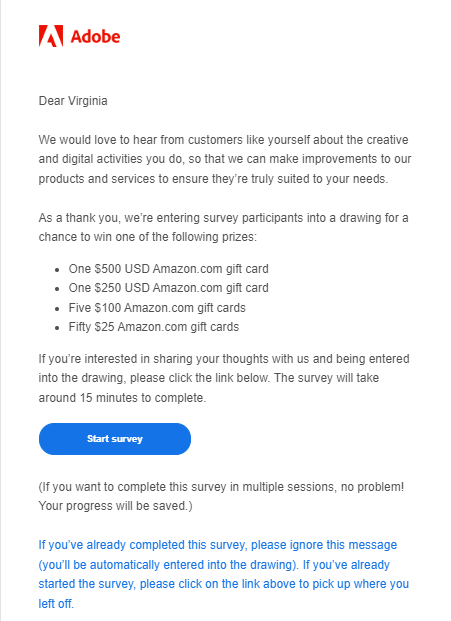 Adobe’s message encourages clients to complete a product survey for feedback that can be used to improve products and services. Image Source: Adobe Maintaining a positive attitude with clients Sometimes, customers will express frustration with their experience. Perhaps the customer service wasn’t up to par, or their purchased product didn’t meet their expectations. Or, maybe you need to notify clients of a closure or product discontinuation. Whatever the reason, it’s essential to maintain positivity in your communications and address their concerns. Take this example from Water Country USA. During an inclement weather event, they closed for the day but emailed clients, informing them of ticket refund options and apologizing.  This Water Country USA email notifying clients of a closure due to inclement weather keeps a positive tone and advises clients of their ticket options. Image Source: Water Country USA Client management tools You can use various client relationship management tools to up your game. The role of automation and software in client management As your client base grows, it becomes more challenging to stay on top of one-on-one communications. You can’t be everywhere at once, and you may have other responsibilities. That’s where marketing automation tools can help. You can purchase software to automate transactional emails and texts. For instance, you might set up automatic emails for shipping updates or client feedback surveys. You can schedule them to be sent whenever a client takes a particular action with your company, like when they make a purchase. Using client management systems effectively Client management systems allow you to oversee your customer interactions in one place. Some include multiple tools, like customer relationship management (CRM) software and project management features. You can use them to establish your client management structure, track communications, and evaluate client management results. If you manage contacts for a small business, look for free client management software options. While free software will likely have minimal features, it can help you establish a baseline for future client management strategies. Integration with CRM systems for holistic management CRM systems connect directly with your client management software, allowing you to manage customer interactions and streamline communication processes. Constant Contact’s CRM integrates with multiple systems you might already use, including social media and e-commerce platforms and tools like Salesforce, Gmail, and SurveyMonkey. Plus, you can use it to manage your client contacts, customer accounts, and ongoing sales deals. Handling client segmentation and real-time analytics As you initiate your client management strategies, use client segmentation to categorize your customers according to their:
That way, you can design client management processes that speak to your customer’s specific needs. It’s also important to establish KPIs to monitor your client management efforts. Most client relations management software systems include real-time analytic options, which you can review whenever you like. Overcoming client management challenges It’s not uncommon to encounter a few obstacles when managing client relations. Here are a few to look out for:
If you experience customer difficulties, remain patient and discuss the issue. Most clients will recognize your efforts and work with you if they see you’re trying to address their problem. Improving client management practices As you implement your client management processes, look for ways to enhance your efforts.
The future of client management Technological advancements will likely change the client management landscape in the future. Automation and artificial intelligence (AI) will continue to make their mark in client management software, and companies will find ways to anticipate client needs and improve customer service. To stay ahead of the curve, understand the principles of client management and how they apply to your company. Then, implement practices to keep your customers happy and connected with your business! Source: https://www.constantcontact.com |

Membership is open to businesses and organizations interested in increasing visibility and brand awareness in Westchester County and surrounding areas.
Archives
February 2024
Categories
All
|
 RSS Feed